Am I Too Old to Start Muay Thai? Let's Talk About It
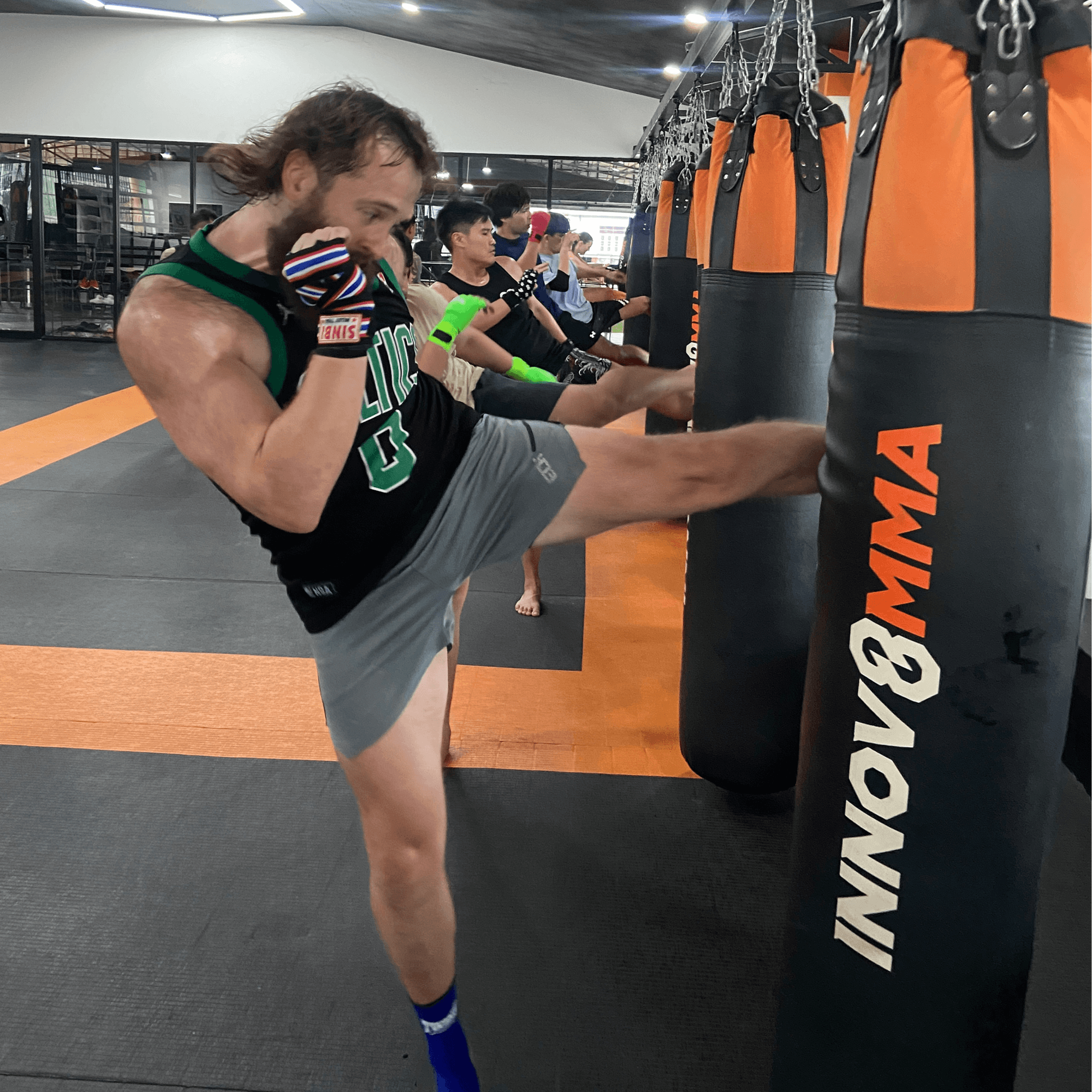
No, you're not too old. Not even close.
Every week, people walk into gyms in Bangkok and cities across the world, regular people in their 30s, 40s, 50s, even 60s, and throw their first kick. The sport adapts to wherever you are, as long as you train sensibly. What changes with age isn't whether you can train. It's how you should train.
This is one of those questions we hear constantly at INNOV8 MMA. Usually it's asked half-laughing by someone hovering near the front desk who has clearly been thinking about it for months. So here's the honest answer, including the parts about recovery, injuries and expectations that most articles skip over.
What age is too late to start Muay Thai?
There isn't one, because the goal shifts with the person. If you want fitness, technique, stress relief and a community, you can start at 35, 50 or 65 and get all of it. If your aim is a professional fighting career, that window is narrower. But almost nobody asking this question means that.
Muay Thai is more adaptable than people outside the sport realise. The same class can hold a 22-year-old preparing for a fight and a 55-year-old who started eight weeks ago, both working the same combination on the pads at completely different intensities. Age determines your pace and recovery needs, not your entry ticket. In Thailand it is completely normal to see former fighters in their 60s still on the pads, while holidaymakers in their 50s do their first ever session at a camp.
Will I be the oldest person in the class?
Possibly, and it matters far less than you think. Adult beginner classes in Bangkok are a broad mix: expats in their 30s and 40s, Thai professionals coming in after work, travellers of every age, and a solid group of members who started past 40 and quietly became the most consistent people in the gym.
What new members actually notice in the first week is that nobody is watching them. Everyone is too busy with their own pads, their own footwork, their own conditioning to grade anyone else. A good Muay Thai gym runs on respect for effort rather than ability. The person most likely to get a fist bump at the end of class is the beginner who kept going, not the athlete who looked sharp.
What about cardiovascular fitness?
You don't need to be fit to start. You get fit by starting. A typical session blends skipping, shadowboxing, pad rounds, bag work and conditioning, and every element can be done at your own pace. Coaches expect new starters to rest between rounds. Nobody has ever been thrown out of a Muay Thai class for breathing hard.
The cardiovascular payoff is real and it arrives quickly. Most beginners notice a clear difference within four to six weeks: rounds feel longer, recovery between them feels shorter, and the stairs at the BTS stop being an event. For adults over 40 this matters more, not less, because interval training of this kind supports heart health, insulin sensitivity and healthy body composition as we age. If you have an existing heart condition or have been sedentary for years, see your doctor first, then tell your coach. That one-minute conversation shapes your first month sensibly.
How can I improve my flexibility and mobility?
You don't need to touch your toes or kick head height to train Muay Thai. Low kicks, body kicks, knees and boxing make up the bulk of the sport, and every one of them is available to a stiff beginner. Flexibility improves as a by-product of training rather than a prerequisite for it.
That said, adults starting later get more from a small daily investment in mobility than almost anything else. Ten minutes of hip openers, hamstring work and shoulder mobility on your off days will do more for your kicks than an extra pad round. Stretch after sessions when your muscles are warm rather than cold before them. Be patient and measure progress in months. Plenty of members who started past 40 kick better at the one-year mark than members half their age who never stretch.
What if I have existing injuries?
Tell your coach on day one, then train around it rather than through it. Old knee trouble, a dodgy shoulder, a lower back that complains: these are completely normal in adult beginners, and every experienced coach has adapted training for all of them. Kicks can be thrown lighter and lower. Clinch work can be skipped. Pad combinations can be built around what your body allows.
Two rules keep older beginners healthy. First, sharp pain is information, not a challenge, so stop and flag it. Second, recovery is training. Past 40 you may need an extra rest day between hard sessions, and taking it is what keeps you on the mats for years rather than weeks. The members who last are not the toughest. They are the ones who listen to their bodies and turn up consistently.
Is it realistic to have my first Muay Thai fight at 45?
For most people yes, if you want it, with honest caveats. Amateur events in Thailand and elsewhere regularly feature first-time fighters in their 40s, and some promotions run masters divisions specifically for older competitors. You will need six to twelve months of consistent training, a coach who believes you are ready, and a genuine commitment to conditioning and sparring in the build-up.
But here's the more important point: fighting is optional. The overwhelming majority of people training Muay Thai at every gym in the world will never step into a ring, and they are not lesser members for it. The training itself is the reward. If a fight becomes a goal that excites you, your coach will tell you honestly whether and when it is realistic.
What is the mental impact of starting Muay Thai later in life?
This is the part nobody expects and everybody talks about six months in. Learning a genuinely difficult physical skill as an adult rewires how you see yourself. The discipline of turning up. The humility of being a beginner again. The visible progress from week to week. It produces a kind of confidence that gym machines never deliver.
And there's the stress side. An hour on the pads after a hard day of work is the closest thing we know to a hard reset for the brain. You cannot think about your inbox while someone is calling combinations at you. Add the camaraderie of suffering through conditioning with the same faces every week, and you get the real reason adults stay in this sport for decades: the community and the mindset, with the fitness as a bonus.
How much time commitment does Muay Thai training require?
Two sessions a week is enough to make steady progress. Three is the sweet spot for most adults with jobs and families. Each class runs about an hour to ninety minutes. Consistency beats volume every time: the member who does two sessions a week for a year will be far ahead of the one who did five a week for six weeks and burned out.
If you are starting past 40, begin with two sessions a week for the first month while your body adapts, then add a third if you feel good. Muscles recover in days. Tendons and joints adapt over months. Respecting that difference is the single best injury prevention strategy there is.
Starting at INNOV8 MMA in Bangkok?
Every week at INNOV8 we welcome complete beginners across a huge range of ages, from university students to members in their 50s and 60s. Your first session is about learning stance, basic strikes and how classes flow, with a coach who knows exactly how to meet you where you are. Real training, real community, and everyone genuinely is welcome, whatever your age and whatever shape you are in today.
Come in for a trial class, tell us your goals and your history, and we will build from there. The only person who thinks you are too old is you.
Frequently asked questions
Am I too old to start Muay Thai at 40 or 50?
No. Adults start in their 40s and 50s at gyms across Bangkok every week. Training is scaled to your pace, and the fitness, skill and community benefits are fully available at any age.
Do I need to be fit before my first class?
No. Classes are built so beginners can rest between rounds and work at their own intensity. Fitness is the result of training, not the price of admission.
Can I compete if I start Muay Thai later in life?
Many people have their first amateur fight in their 40s, and some events run divisions for older competitors. It requires months of consistent preparation and an honest coach, but it is a real option, not a fantasy.
How many sessions a week should an older beginner train?
Start with two sessions a week for the first month, then add a third if your body feels good. Consistency and recovery matter more than volume, especially past 40.