Muay Thai vs BJJ vs MMA: Which Should You Train in Bangkok?
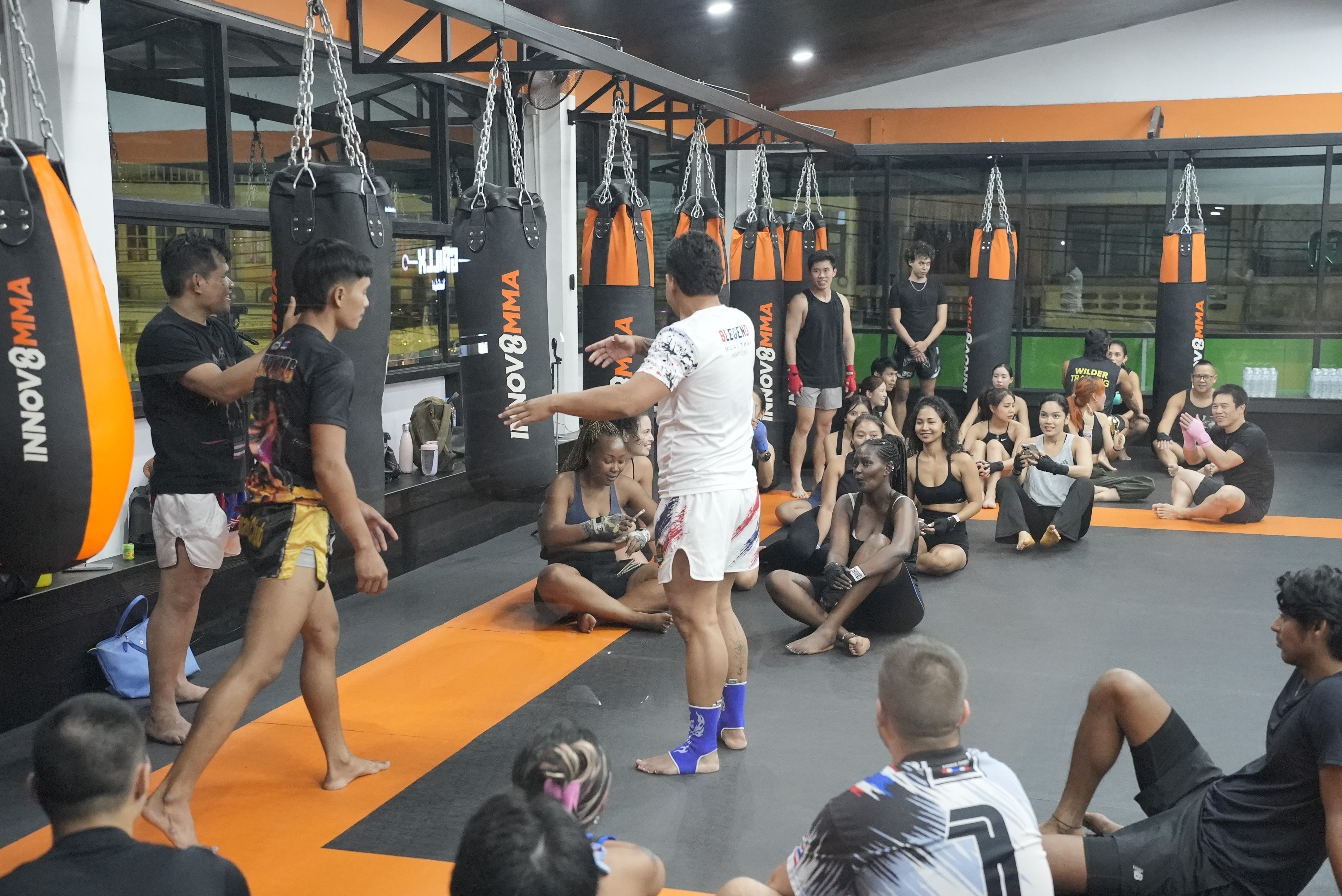
Bangkok is one of the best cities in the world to train martial arts. You probably already knew that. What you might not know is which discipline to actually start with.
If you're an expat settling in, a traveller passing through, or someone who's lived here for years and finally wants to get on the mats, the choice between Muay Thai, BJJ, and MMA can feel overwhelming. They're all effective. They all build fitness. And Bangkok has world-class coaching in all three.
So how do you pick? Here's an honest comparison based on what each discipline actually involves, who it suits best, and what training looks like day to day.
Muay Thai: Thailand's National Sport
Muay Thai is the most obvious choice for anyone training in Bangkok, and for good reason. You're in the birthplace of the art. The depth of coaching talent here is unmatched anywhere else on earth.
What you'll actually do in class
Muay Thai uses eight points of contact: fists, elbows, knees, and shins. A typical group session runs around 60 to 90 minutes and covers pad work with a Thai kru (instructor), bag rounds, partner drills, and conditioning. Expect to burn somewhere between 600 and 800 calories per session. It is genuinely one of the most intense workouts you'll ever do.
At INNOV8 MMA, the Muay Thai programme is led by experienced Thai coaches who have lived the fight life themselves. Classes cater to complete beginners through to experienced fighters, and the coaches adjust intensity based on where you are. You won't be thrown into the deep end on day one.
Who it suits
Muay Thai tends to attract people who want a serious fitness challenge with a skill component. If your main goals are weight loss, functional strength, and learning how to strike properly, this is your discipline. It's also the most accessible of the three for total beginners because the movements feel intuitive relatively quickly.
Things to know
You don't need your own gear to start. Gloves, wraps, and pads are available at most gyms. Once you're training regularly, investing in your own gloves and shin guards is worth it. Drop-in classes at INNOV8 start at 550 baht, with discounted packs available for longer stays.
BJJ: The Gentle Art That Isn't Gentle
Brazilian Jiu-Jitsu has exploded in popularity across Bangkok over the past decade. Where Muay Thai is about striking, BJJ is about grappling. You'll learn to control, sweep, and submit opponents on the ground using leverage and technique rather than size and strength.
What you'll actually do in class
A BJJ session typically starts with a warm-up, moves into technique instruction (your coach will demonstrate a position, escape, or submission sequence), then finishes with live rolling. Rolling is basically sparring on the ground, and it's where everything clicks. Sessions are offered in both gi (the traditional uniform) and no-gi formats.
At INNOV8, BJJ is led by Professor Oswaldo Ornellas, a fourth degree black belt under the Gracie Humaita lineage with over 25 years of international coaching experience. He's a decorated competitor and gold medallist at both National and World Championship level. Belt promotions from white through to black are overseen directly by Professor Oswaldo.
Who it suits
BJJ is often called "human chess" because it rewards problem-solving and patience over raw athleticism. It's ideal if you're someone who likes strategy, enjoys learning systems, and doesn't mind being humbled regularly (everyone gets tapped when they start). It's also uniquely effective for smaller people because the whole art is built around using leverage to overcome size advantages.
Things to know
Expect to be confused for your first few weeks. That's completely normal. BJJ has a steep learning curve at the beginning, but the progression is incredibly satisfying once positions start making sense. Fundamentals classes at INNOV8 are specifically designed for newcomers, covering core positions, escapes, and submissions in a structured environment. You don't need a gi to start; just wear comfortable athletic clothing for your first session.
MMA: Putting It All Together
Mixed martial arts combines striking, wrestling, and ground work into a single discipline. If Muay Thai is the stand-up game and BJJ is the ground game, MMA is the full picture.
What you'll actually do in class
MMA classes blend elements from multiple martial arts. A typical session might cover striking-to-takedown transitions, cage awareness, positional control, and core grappling skills. At INNOV8, classes are split into MMA Fundamentals (focused on building a well-rounded base) and Fight Prep and Sparring (pad work, situational drills, and live rounds for more experienced students).
The MMA programme is also coached by Professor Oswaldo, whose BJJ black belt credentials and competition experience translate directly into the grappling and ground control aspects of MMA training. He structures sessions to develop both stand-up and ground skills in a way that actually transfers to live situations.
Sparring is optional and only introduced once coaches are confident in your control and ability. Nobody is going to ask you to fight on your first day.
Who it suits
MMA is for people who want to understand fighting as a complete system rather than specialising in one area. It attracts a mix of people: some who want to compete eventually, some who just want the most practical self-defence training available, and plenty who simply enjoy the variety of training across multiple ranges.
Things to know
You don't need a background in any martial art to start MMA. The fundamentals programme at INNOV8 is built for beginners. That said, some people prefer to build a foundation in one discipline first (usually Muay Thai or BJJ) before adding MMA into their training. There's no right or wrong approach. It depends entirely on your personality and goals.
The Quick Comparison
For pure fitness and fat loss: Muay Thai. Nothing burns calories quite like pad rounds and clinch work. It's consistently the most physically demanding of the three.
For technical depth and longevity: BJJ. The belt system gives you a clear progression path, and you can train BJJ well into your 50s and beyond because it relies on technique over athleticism.
For well-rounded fighting ability: MMA. You'll develop skills across all ranges, from standing to the ground, and understand how they connect.
For self-defence: All three are effective, but BJJ and MMA tend to be the most practical in real-world situations because most confrontations end up on the ground.
For stress relief: Honestly, all three. There's something about hitting pads or rolling on the mats that resets your brain in a way a treadmill never will.
Can You Train More Than One?
Absolutely. In fact, most people at a multi-discipline gym end up cross-training eventually. The Muay Thai fighters start getting curious about what happens when someone takes them down. The BJJ players want to understand distance management on the feet. And the MMA crowd is already doing both by definition.
Training at a gym that offers all three under one roof makes this much easier than bouncing between different academies across the city. You get familiar with one coaching team, one training culture, and one community. Your coaches can also see how your skills translate across disciplines and give you better guidance on where to focus.
Practical Details
INNOV8 MMA is located on Sukhumvit 93 in the Bang Chak area of Bangkok, a few minutes' walk from BTS Bang Chak station. The gym offers Muay Thai, BJJ, MMA, and Krav Maga (as Thailand's only KMG-licensed academy), along with junior programmes for ages 8 to 16, women's only classes, and private one-on-one sessions across all disciplines.
Drop-in rates start at 550 baht per class. Open gym access starts at 400 baht. Discounted class packs and short-term passes are available for those training more regularly. A free trial class is offered for anyone who wants to experience the gym before committing.
The Honest Answer
There's no universally "best" martial art. The best one is the one you'll actually show up to train. If the idea of throwing elbows and knees excites you, start with Muay Thai. If you're drawn to the puzzle of grappling, try BJJ. If you want a bit of everything, go MMA.
The good news is that in Bangkok, you have access to legitimate, high-level coaching in all three. Most gyms, including INNOV8, will let you try a class before you commit. So rather than overthinking it, just pick the one that sounds most interesting and get on the mats. You can always add another discipline later.